
Did you know that a laundromat business plan increases your odds of success when starting a laundry business and getting a small business loan?
Dave Menz bought his first laundromat in 2010 and now owns four laundromats that collectively earn $1.8 million per year. We’ll share some of his business planning strategies to help you follow in his footsteps.
We’ll explain what you need to know about the laundromat industry and the essential parts of a laundromat business plan. Plus, we’ll provide you a copy of Dave Menz’s free business plan template.
Keep reading or click on any of the links below to jump to the section that interests you:
- Research the Laundry Industry
- Parts of a Laundromat Business Plan
- Take Our Laundromat Business Course
- How to Create a Laundromat Business Plan
- Step #1. Perform Market Research
- Step #2. Identify Equipment and Inventory Needs
- Step #3. Create Your Marketing Strategy
- Step #4. Write Your Operational Plan
- Step #5. Create Financial Projections
- Step #6. Include Your Request for Financing
- Step #7. Add Attachments to the End of the Document
- Step #8. Add an Executive Summary
- Closing
Keep reading to learn more about the laundromat market.
Research the Laundry Industry
How much does a laundromat business cost?
Expect to spend between $100K and $1 million to buy an existing laundromat or start a new one. Dave suggests:
How profitable are laundromats?
According to Cents, U.S. laundromats normally have 20% to 30% profit margins on $300K in revenue before financing costs. Dave said:
Now that you understand the profitability of the laundry industry, let’s look at the different parts of a laundry services business plan.
Parts of a Laundromat Business Plan
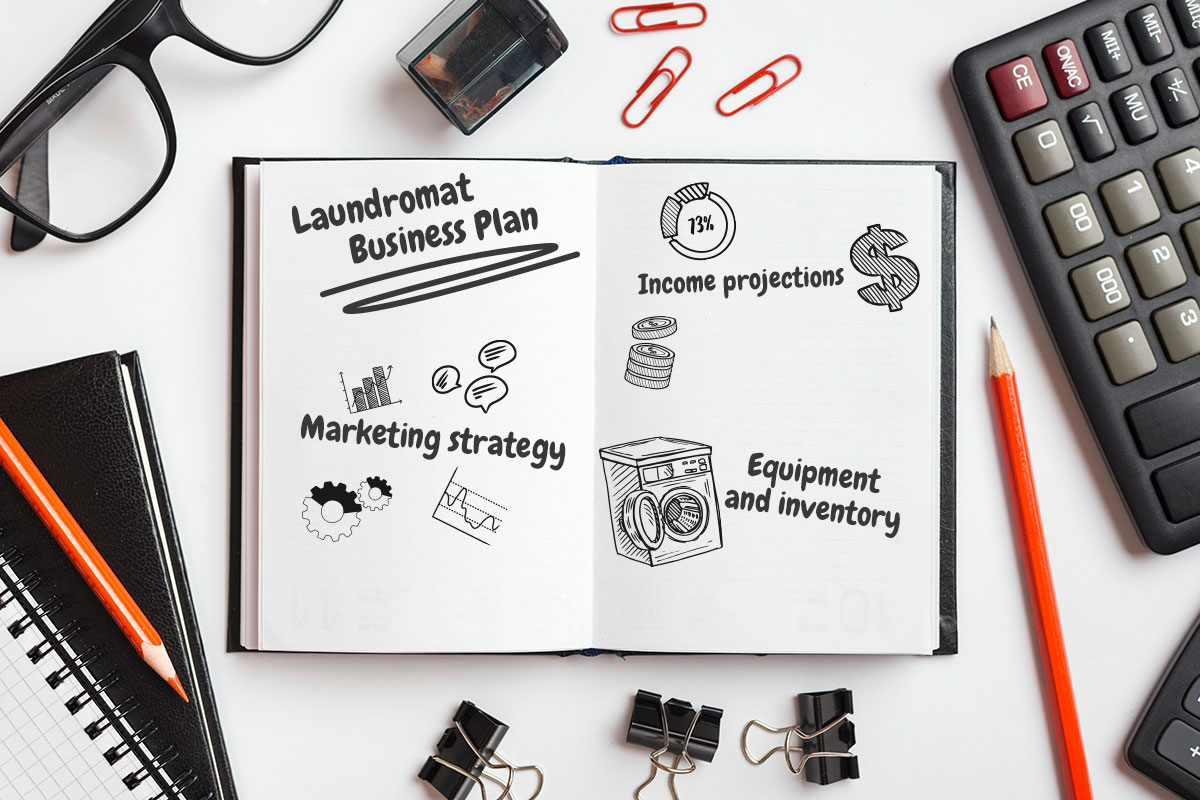
Dave Menz told us a solid laundromat business plan will include the following parts:
- Project summary
- Marketing strategy
- Operating plan
- Equipment and inventory
- Income projections
- Loan proposal (optional)
- Attachments
Download our free laundromat business plan template. This template is modified from the more extensive laundry business plan template in our UpFlip Academy course with Dave, which we’ll discuss below.
Take Our Laundromat Business Course
Want to learn more about starting a laundromat business?
Take our laundromat business course with Dave Menz. It includes over four hours of laundromat business lessons and nine templates to help you start a laundromat business.
How to Create a Laundromat Business Plan

If you don’t want to use a template, here are the basic steps to writing your own business plan:
- Perform market research.
- Identify equipment and inventory needs.
- Create your marketing strategy.
- Write your operational plan.
- Create financial projections.
- Include your request for financing.
- Add attachments to the end of the document.
- Add an executive summary.
Keep reading to learn more about how to write a business plan for a laundromat.
Step #1. Perform Market Research
Before you can write an effective laundromat business plan you need to understand the local laundromat industry. You’ll want to research:
- Industry trends
- Target market
- Competitors
- Suppliers
- Potential locations
Make sure to take notes and cite the sources you used for information. Include all this information in the summary at the beginning of your laundry shop business plan.
Step #2. Identify Equipment and Inventory Needs

Laundry businesses need equipment to provide the services offered. The costs may change depending on whether you’re starting a new laundry business or buying an existing laundry business.
New commercial washing machines and dryers can cost between $1K and $5K each, while industrial machines may cost between $10K and $50K per unit. These figures are based on research done for our blog on how to start a laundromat business. The brand, load capacity, and efficiency will impact the cost.
Dave told us:
You’ll also need other equipment like:
- Vending machines
- TVs
- Folding tables
- Chairs
- Tables
- Laundry carts
Make sure to detail how many of each product you will get and all the costs associated with them.
Step #3. Create Your Marketing Strategy
Your marketing plan should include your business name, branding, signage, and marketing channels. Remember to address your laundromat location, pricing strategy, unique selling propositions, and whether you intend to offer a rewards program.
Explain how you’ll use all these elements to attract and retain clients. Dave explains:
Step #4. Write Your Operational Plan
Potential investors will want to understand how you’ll provide laundromat services. That means they need to understand aspects like your business hours, security, how the laundromat will be run, and how you’ll maintain machines.
Dave told us:
Step #5. Create Financial Projections

Calculate the laundromat startup cost, which will normally be between $100K and $1 million. In addition to the cost to open a laundromat, you also have to consider the monthly cost to run a laundromat. Monthly expenses typically include:
- Rent
- Water
- Electricity
- Gas (optional)
- Insurance
- Employees
- Taxes
- Loan payments
Dave told us:
In addition, you’ll want to calculate the amount of revenue you’ll make each month. You can use this formula:
Revenue = price per load × number of machines × (operational hours / machine time)
Dave told us:
Unless you have good reason to believe otherwise, I’d go with that number as your baseline revenue assumption.
Once you’ve calculated all this, you’ll want to create a five-year financial plan and see how much money you’ll need to get through opening a laundromat.
Step #6. Include Your Request for Financing
The cost to start laundromat operations might be more than you can afford from your personal savings. Laundromat businesses will often get loans to help with the financial aspects of starting a laundry business. It’s a good idea to apply for loans backed by the U.S. Small Business Administration.
When you’re applying for laundromat loans, you’ll want to document how much money you need and include an itemized list of how the money will be used. Your application should also list any additional debt you have, requested terms, and your payback schedule.
You can also use this section if you’re trying to get owner-backed financing from an existing laundromat.
Step #7. Add Attachments to the End of the Document

The attachment section is where you document everything. You’ll want to attach documentation for:
- All startup costs
- Reference materials
- Market analysis reports
- Financial statements
- Resumes for your core team members
- Target customers and demographic reports
- Bank statements
- Your five-year cash flow projections
Basically, this section is for anything you think the people reviewing the business plan need to see. Your documentation will help them validate your assumptions and verify your market analysis, financial plan, and cash flow.
Step #8. Add an Executive Summary
An executive summary is the first portion of your laundry service business plan, but it’s the last section you want to write. Starting a laundromat business plan’s executive summary before you write the rest of the business plan will mean rewriting it multiple times.
It should ideally be less than a page and should cover:
- Laundry business name
- Mission
- Services
- Proposed store location
- New or existing business
- Square footage
- Funding needs
- What makes your business different
- Management team
- Licensing and permits
- Locations
- Target audience
- Competitors
This is the area of your business plan where you help people see what makes you different from other businesses. It’s also an opportunity to show that you understand the key elements of offering services in your location.
Let’s look at each of these and the role they play in a business plan for laundromat owners.
Laundry Business Name
Your laundromat business name is the first thing people will see. You want people to remember it. Don’t be lazy and name it something like Coin Laundry.
We have a free business name generator you can use to come up with ideas.
Mission Statement
Your mission is the big reason that you want to provide services to your target market. It might be to increase convenience or add a service to the market that isn’t currently available.
Services
You’ll want to explain what products and services you offer. While many people might just want a coin laundromat business plan, you can improve your profits and revenue by including additional services such as:
- Wash-and-fold service
- Pickup and delivery
- Vending machines
- Pay-with-card systems
- Dry cleaning service
- Selling laundry products
Make sure to consider these products and services when thinking about how to start a laundry service.
Proposed Store Location
For your first location, you’ll want to document why it’s a convenient location for potential customers. You should use demographic data from the census to help you identify good locations.
You should also help the reader understand whether you have additional locations in mind or plans for future growth.
New or Existing Business
Document whether you’re buying existing laundromats or building new laundromats. Buying an existing laundromat means you’ll be buying equipment, the business processes, and the existing customer base.
You’ll also be getting all the problems. After the third year, machines need more maintenance. Plus, you’ll need to make sure that there aren’t any outstanding lawsuits or legal issues associated with the business.
Meanwhile, building a new laundromat means you’ll be able to install cutting-edge technology and environmentally friendly practices. However, it will take longer to turn a profit.
Look at the big picture to see which strategy makes more sense over the next 10 to 20 years.
Square Feet
You’ll want to explain how many square feet your laundromat will be. B&C Technologies suggests assuming 150 square feet for 50 lbs per hour plus 3 square feet per pound of laundry stored.
Meanwhile, Soap Opera Laundromats says that the average family does 2,184 pounds of laundry a year (or 42 pounds a week). That means 150 square foot space could only handle 24 loads a day. If you want to be able to do 1,000 loads per day, you’ll need 42 washers and dryers and at least 6,300 square feet.
Funding Needs
Make sure to include a summary of the information in step six. You need to include the amount you’re asking for and how it will be used. Just don’t include the itemized list and individual prices.
What Makes Your Business Different
Explain how your customer experience, eco-friendly features, and additional services will differentiate you from other laundromats. Explain why your business model will appeal to customers.
Management Team

Provide a short introduction to your internal team and why they set your business up for success. List any relevant experience that shows your team knows how to run a successful business.
Licensing and Permits
You’ll want to document the legal structure, licenses, and permits your laundry business needs to provide services to customers. If you intend to take out loans, make sure you have all permits and documentation before you submit your application.
Target Audience
Explain who you’re trying to target and how many people fit that category within a reasonable radius. Up to 70% of homes in the U.S. have washing machines and dryers. That means only 30% of people will need laundromat services.
Lower income households, college students, and people living in apartment complexes tend to be the primary people who need the convenience of a laundromat.
Competitors
You’ll want to do a strengths, weaknesses, opportunities, and threats (SWOT) analysis of your main competitors. Review how they market themselves on social media platforms, check whether they use modern technology, and see how much they charge. Make sure to add all this information to your business plan.
Closing
At this point, you should now know much more about how to write a laundromat business plan. We’ve reviewed the most important information about the laundry industry and provided you with a business plan template for laundromats.
We also explained the parts of a coin laundry business plan and how to write a successful business plan.
Do you feel confident about writing a laundromat business plan startup document?


